The Fastrite process

The work behind
a finish that lasts.

Powder coating turns dry powder into a protective finish on metal. Here’s how careful preparation, controlled application and the right heat work together at Fastrite.

Start with the essentials. Open the technical details whenever you want to go deeper.

01 / Prepare the metal

Prepare the metal.
Protect the finish.

Preparation is the foundation of the coating system. It helps the powder bond to the metal and protects against corrosion. We’ve invested in several treatment options to suit different parts and coating requirements.

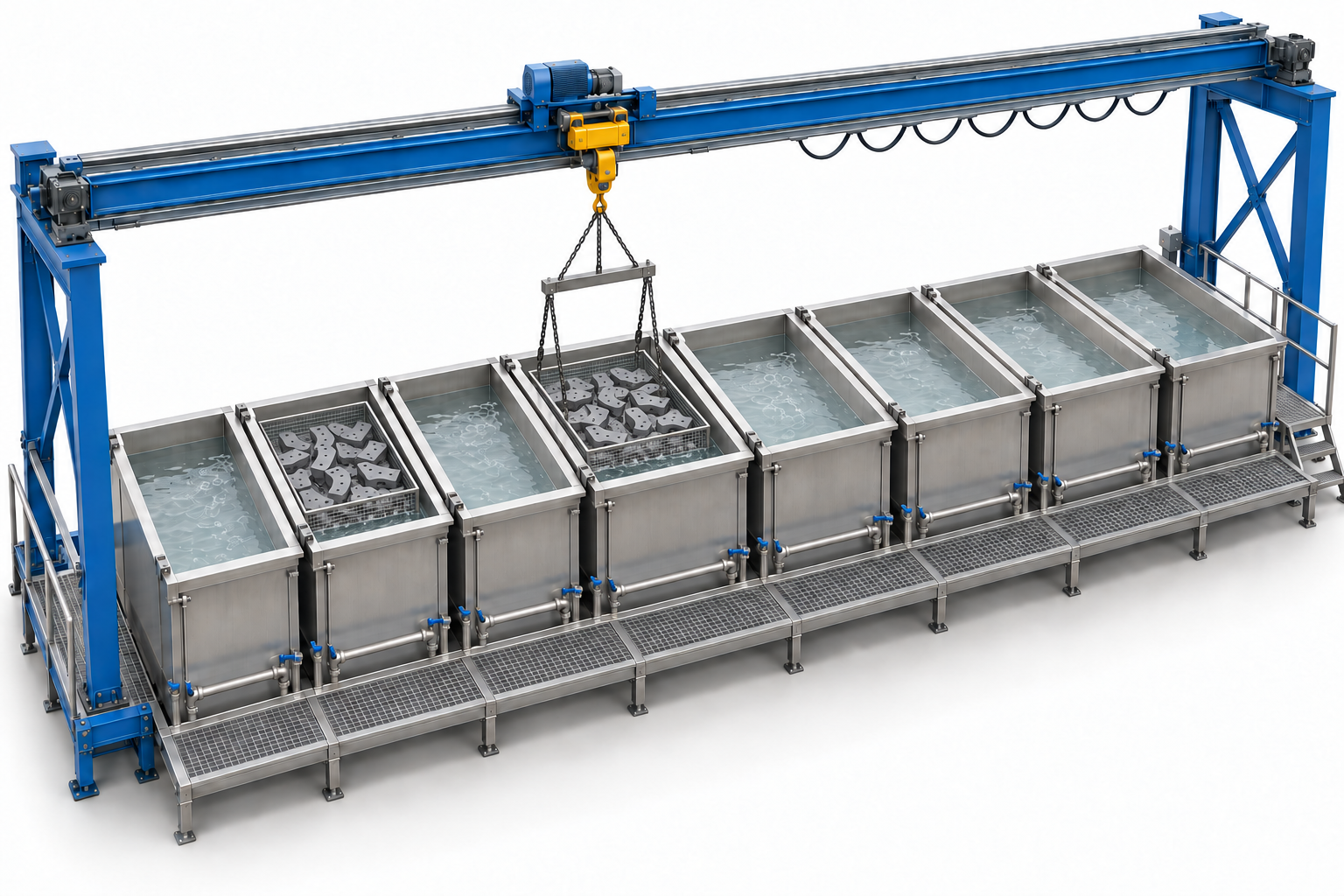
Eight immersion baths with an overhead crane lowering a basket of metal parts into one bath

Our eight-stage nano-ceramic pre-treatment

  • Clean and condition. Degreaser and acid treatments remove contaminants. The metal conditioner prepares the surface for a uniform conversion coating.
  • Create a bonded foundation. Nano-ceramic chemistry reacts with the metal, forming a layer that supports corrosion resistance and powder adhesion.
  • Rinse with cleaner water. Each chemical stage is followed by a reverse-osmosis rinse, continuously replenished to limit contamination build-up.
  • Keep the chemistry in check. Our team tests the treatment chemicals in-house, with additional checks by external specialists.

Why the final rinse matters. Ordinary water can leave salts on the metal as it dries. Trapped beneath a good-looking finish, they can contribute to blistering, corrosion and poor adhesion later. Our clean RO final rinse helps protect the life of the coating.

The technical detail: surface chemistry, RO water and our checks

Cleaning gives the treatment a sound starting point

Oils, grease, manufacturing residues and oxides interfere with treatment and coating adhesion. Degreasers address oily contamination, while the acid stage removes suitable oxides and other surface contamination. Rinsing between chemical stages removes carry-over before the next treatment.

What the metal conditioner does

Even clean metal can have differences across its surface that affect how the next treatment reacts. The conditioner helps bring that surface into a suitable, consistent condition for the conversion coating to form more evenly and bond firmly. It prepares the metal for the next stage; it is not the finished protective coating.

How nano-ceramic treatment bonds to the metal

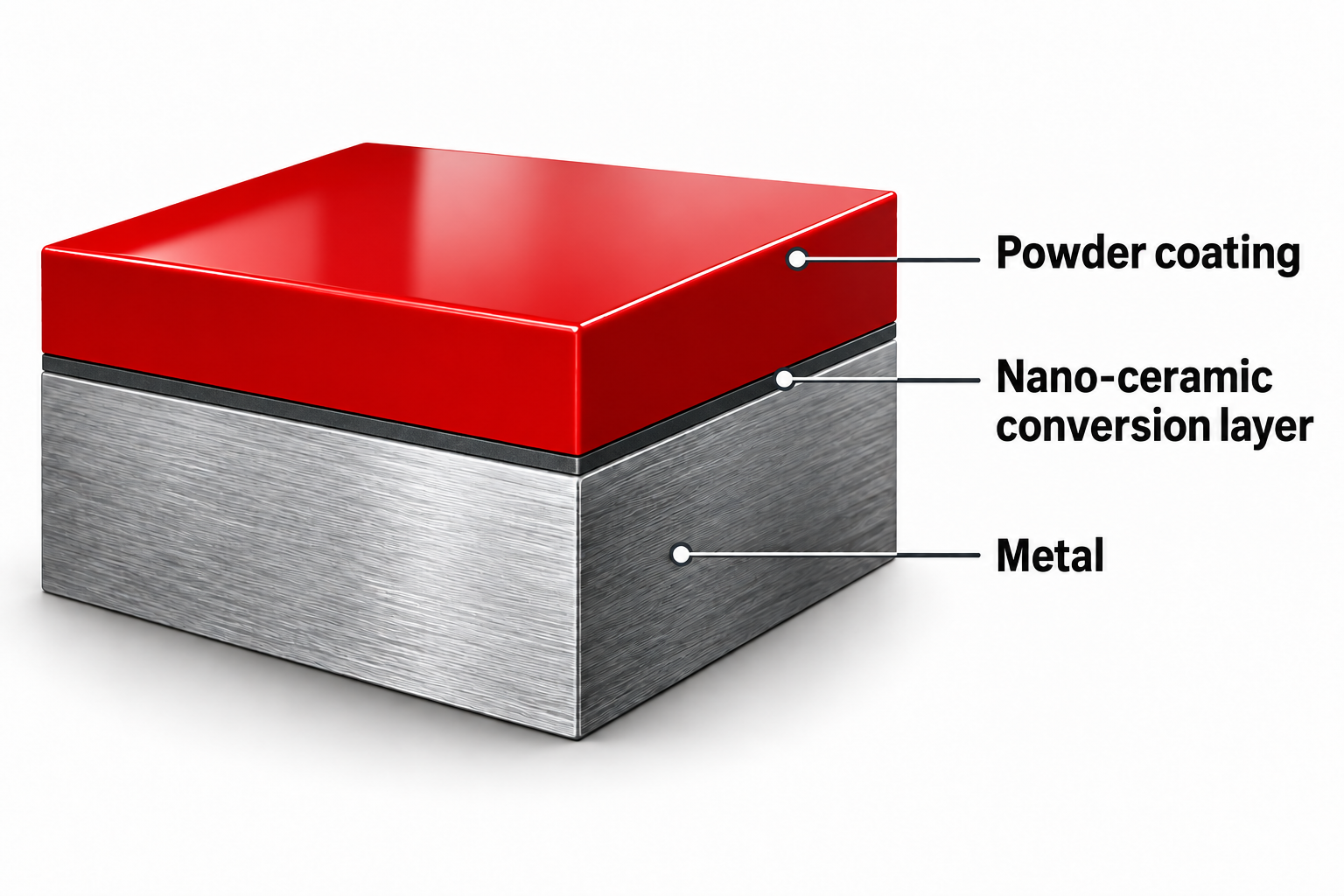
Our zirconium-based treatment reacts at the prepared metal surface to form a microscopic, firmly bonded conversion layer. It changes the surface chemistry, creating a foundation for the powder to adhere to and improving resistance to corrosion beneath the finish.

The conversion layer and powder coating work as a system: the treatment supports the bond to the metal, while the powder forms the outer protective finish.

Cross-section showing a smooth red powder coating, a thin nano-ceramic conversion layer and the metal beneath

What our RO plant does

Reverse osmosis uses pressure to push water through specialised membranes, separating out much of the dissolved salts and minerals. Our RO plant supplies the rinses that follow each chemical stage.

1905µS/cm

These approximate conductivity readings describe our incoming tap water and RO-treated supply water. Conductivity measures how readily water carries an electrical current; a lower reading generally indicates fewer dissolved salts.

Rinse water collects residues from the parts it washes. We continuously replenish it to limit contamination build-up.

The final rinse protects tomorrow’s finish

The last rinse is especially important because the next steps are drying and coating. Water evaporates; dissolved salts and minerals can stay behind and become trapped underneath the powder coating.

Soluble salts can attract moisture through the coating and create a conductive solution at the metal surface. Over time, that can encourage corrosion, blistering and loss of adhesion. A part may look excellent when it leaves the plant, yet these hidden residues can shorten the coating’s life. Reducing deposits before coating helps protect its long-term performance.

Measured in-house, supported by specialists

Our team carries out regular titrations to check treatment-chemical concentrations. External specialists also test the chemistry, supporting the checks we perform ourselves between their visits. The readings help us manage the process while work is moving through the plant.

When immersion isn’t suitable

Different parts.
Other ways to prepare them.

Oversized parts, water-retaining cavities or an existing coating that needs removing can call for a different approach. We’ve invested in these alternatives as part of our metal treatment service, so our team can choose a suitable route for the job.

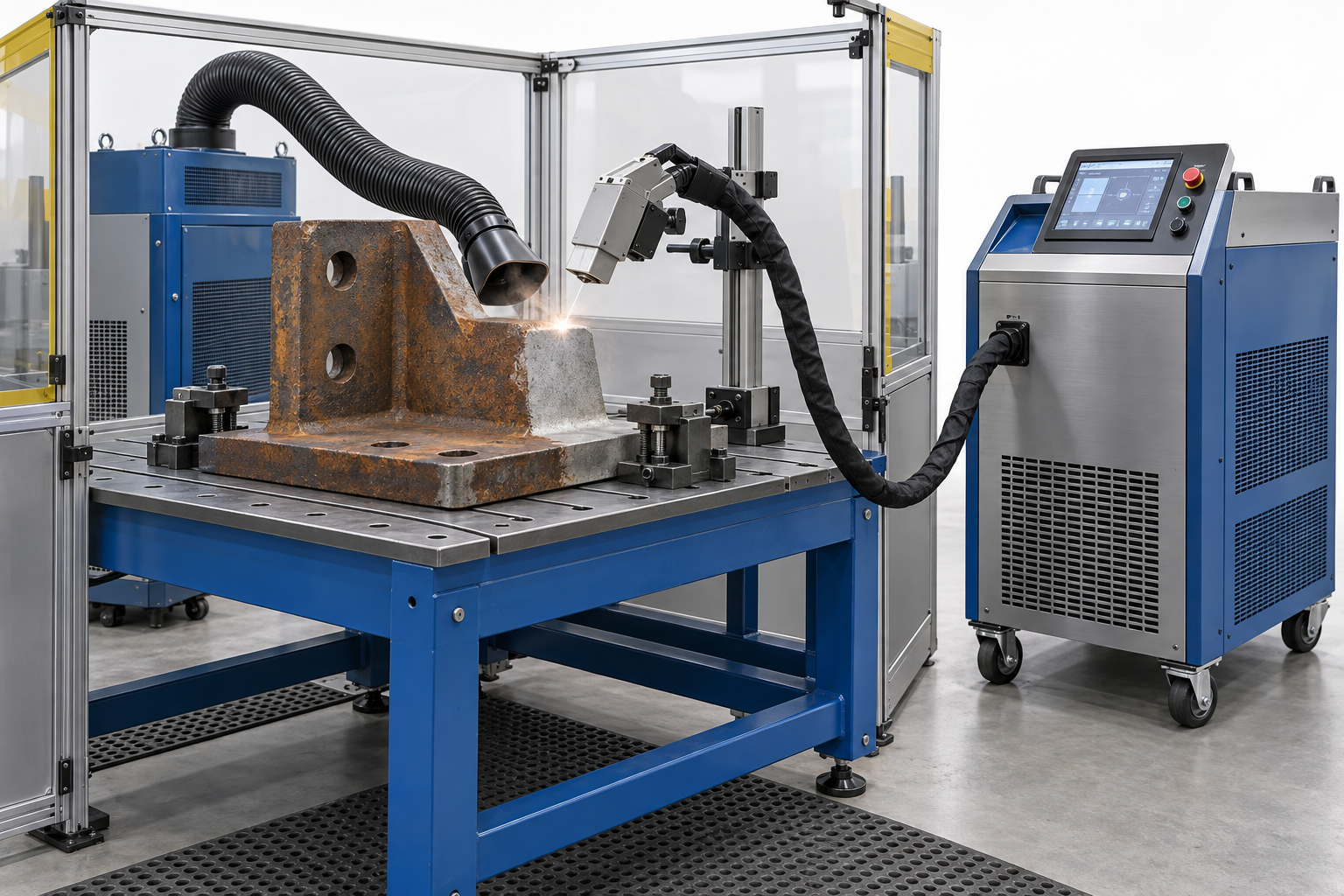
Laser cleaning a secured steel part with local fume extraction

Continuous-wave laser cleaning

Targeted removal of rust and suitable old coatings, without immersion or abrasive blasting media.

How laser cleaning works

Controlled laser energy removes contamination from accessible areas of the metal. It provides a dry, non-contact option, with settings adjusted for the surface and material being removed.

The resulting surface profile depends on the metal, equipment and settings. Cleaning does not automatically create the right texture for every coating, so the required preparation must be considered for each job.
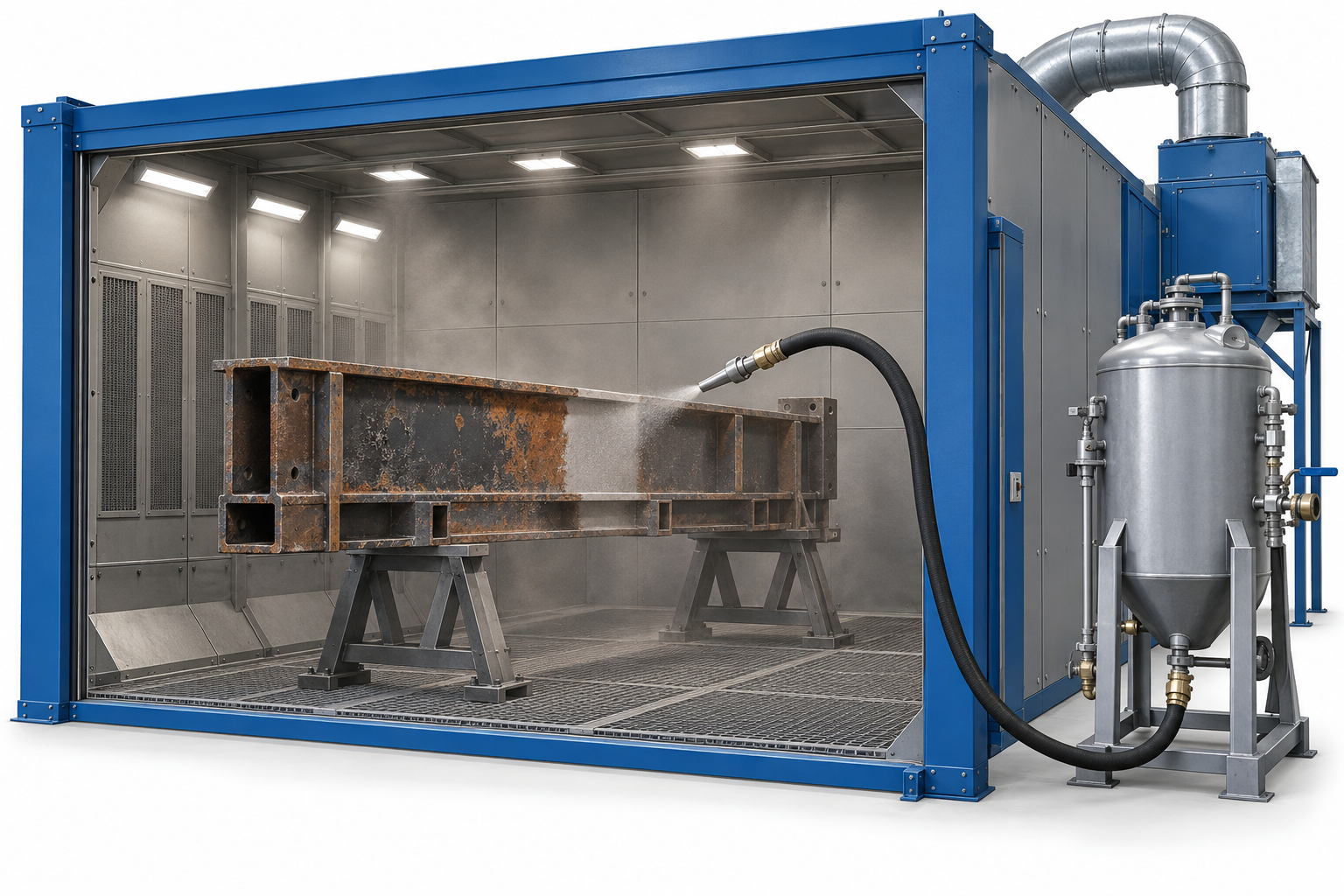
Abrasive blasting equipment removing rust from a steel frame

Sandblasting

Removes rust, scale and suitable existing coatings, while creating a surface profile for the new coating to grip.

How blasting prepares metal

Abrasive impacts clean and profile the surface. We use blasting selectively where stripping is needed or the part’s size or construction makes immersion unsuitable.

The abrasive and profile must suit the metal and coating system. Dust and blasting residues are removed before coating. The profile supports mechanical adhesion; blasting alone does not create a chemical conversion layer.

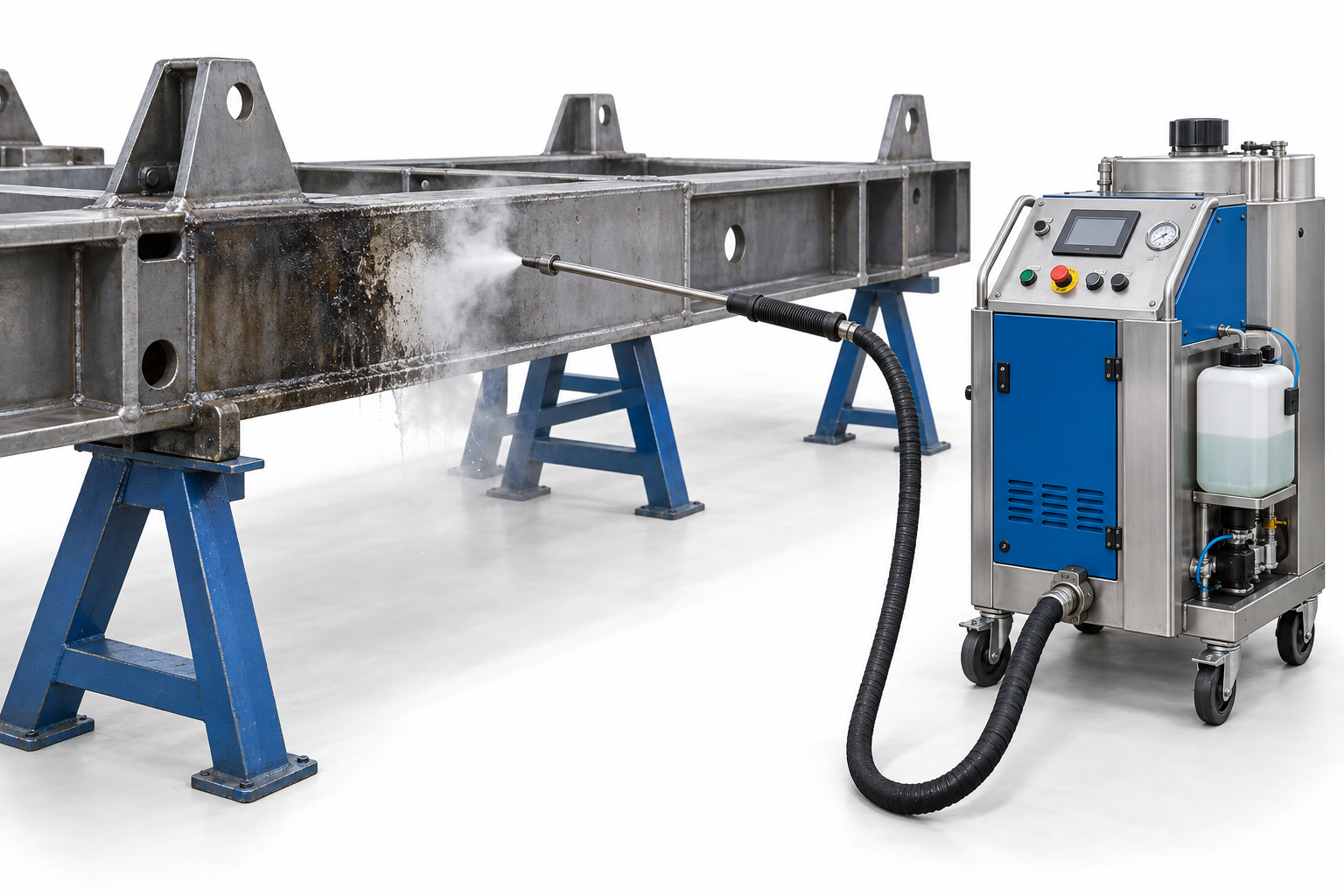
Industrial steam cleaner with chemical dosing treating a large steel frame

Steam cleaning with phosphate

Cleaning and conversion treatment for suitable oversized or water-retaining parts that cannot use the immersion line.

How steam and phosphate help

Our industrial steam cleaner operates at 170°C and incorporates phosphate treatment. Steam assists cleaning, while the phosphate chemistry forms a conversion layer that supports adhesion and corrosion resistance beneath the coating.

Accessible surfaces can be treated without immersing the whole part. The process uses relatively little water, but drainage and thorough drying still matter where cavities could retain moisture. The temperature describes the equipment’s operation, not a specified metal temperature.

02 / Apply the powder

A controlled application.
A consistent finish.

Good preparation deserves equally careful application. Our people work with an integrated coating line to control how the powder reaches your parts—and protect the surface as it moves towards the oven.

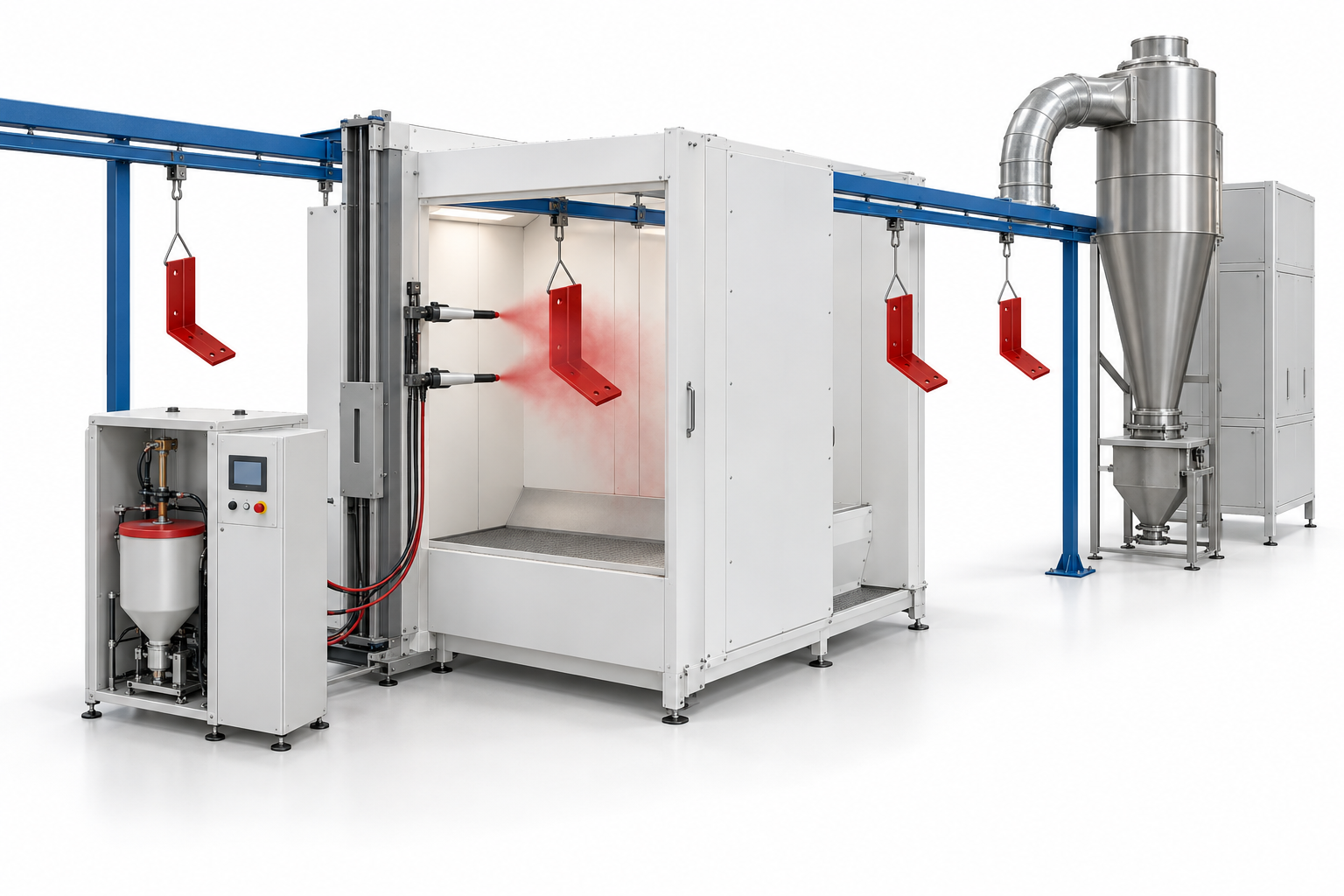
Conceptual conveyor powder booth with spray equipment, a separate powder feed centre and cyclone recovery

The right tools give our team control

  • HDLV powder delivery. A soft, controlled powder cloud helps our team manage coverage and film build, including on complex shapes.
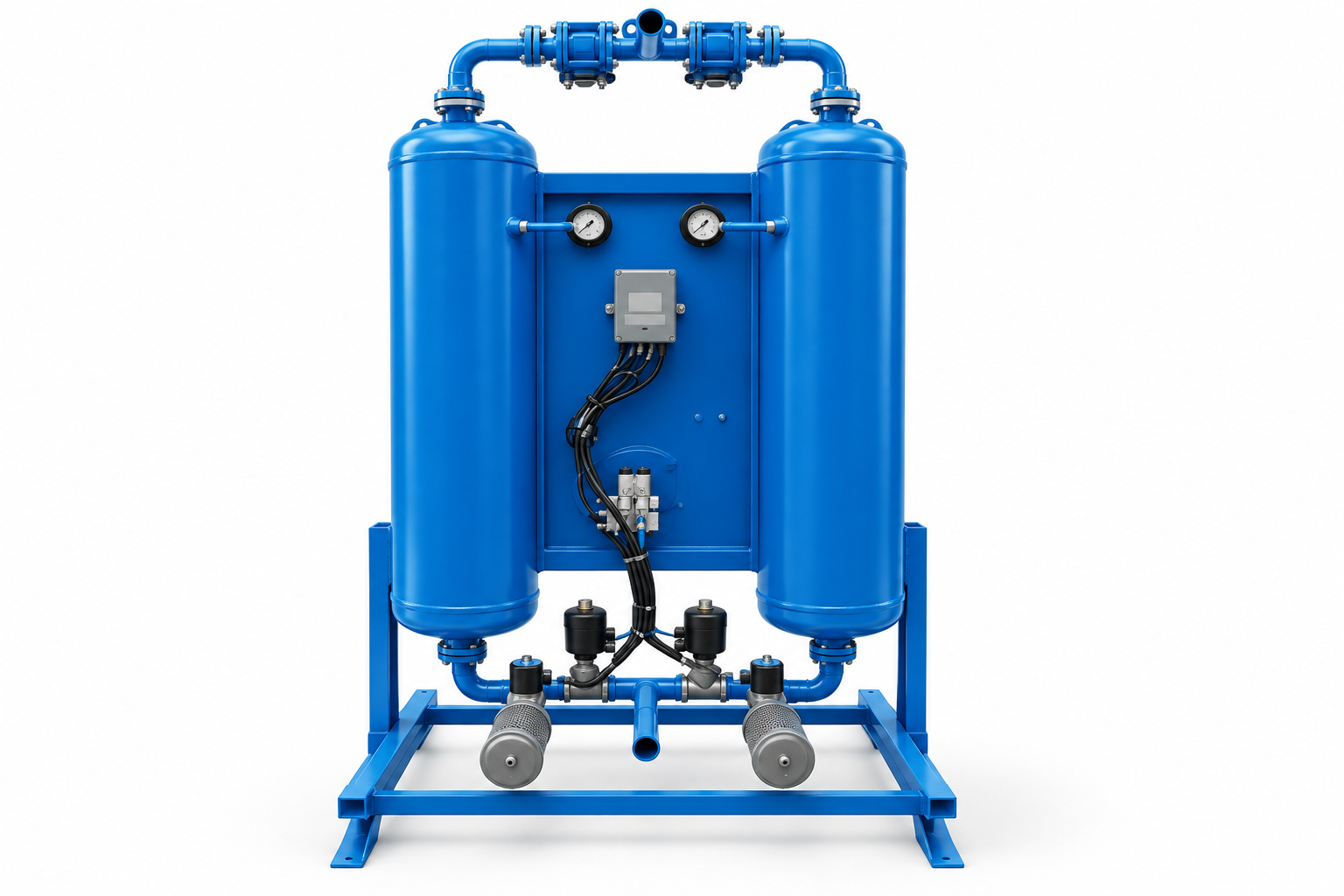
  • Industrial desiccant dryers. Dry compressed air helps keep moisture from disrupting powder flow and finish quality.
  • Purpose-built booths and feed centres. Dedicated equipment manages powder supply and overspray, with cyclone recovery to reduce avoidable waste.
  • Conveyor production. Parts move from application into the oven with less handling, helping protect uncured powder and keep the job moving.
The technical detail: HDLV, dry air and the coating line

Why a softer powder cloud matters

Electrostatic spraying gives powder an electrical charge that attracts it to the prepared, grounded metal. Gun settings, powder delivery and part geometry influence the coating deposited on the surface.

HDLV means high density, low velocity. It transports a high concentration of powder using less air than conventional venturi delivery, with separate control of powder output and spray-pattern air.

Lower air velocity reduces turbulence around the part. Our team can adjust delivery and film build without simply adding more air to move more powder, helping control deposition around awkward shapes and recesses.

Booths, cyclones and powder feed centres

Our professionally engineered booths provide a dedicated application environment. Extraction carries overspray to the recovery system, where cyclones separate powder from moving air for collection and suitable reuse.

Powder feed centres organise delivery to the guns and support cleaning during colour changes. Together, these systems help control overspray, manage powder handling and reduce avoidable waste.

Serious air drying, before the powder is sprayed

Our twin-tower desiccant dryers typically achieve a compressed-air dew point between −20°C and −40°C. That is a measure of dryness, not the temperature at which we spray.

Desiccant material adsorbs water vapour from the compressed air. Moisture can cause powder to clump, disrupt flow and affect the finish; moisture at the coating interface can also compromise adhesion. Controlling it helps support clean, consistent application.

Industrial blue twin-tower desiccant air dryer with control panel and full-height pressure vessels

Less handling between coating and curing

Once hung, parts travel on the conveyor from application into the oven. Reducing transfers limits opportunities for fingerprints, contamination or disturbance of uncured powder.

Our team plans hanging, spacing and line speed around the parts and coating system. Steady movement supports repeatable processing and an efficient flow through the plant.

03 / Bake and protect

The right heat.
Checked, not assumed.

Heat develops the coating’s finished properties. It takes the right combination of time and temperature, with checks that tell us how the process is performing.

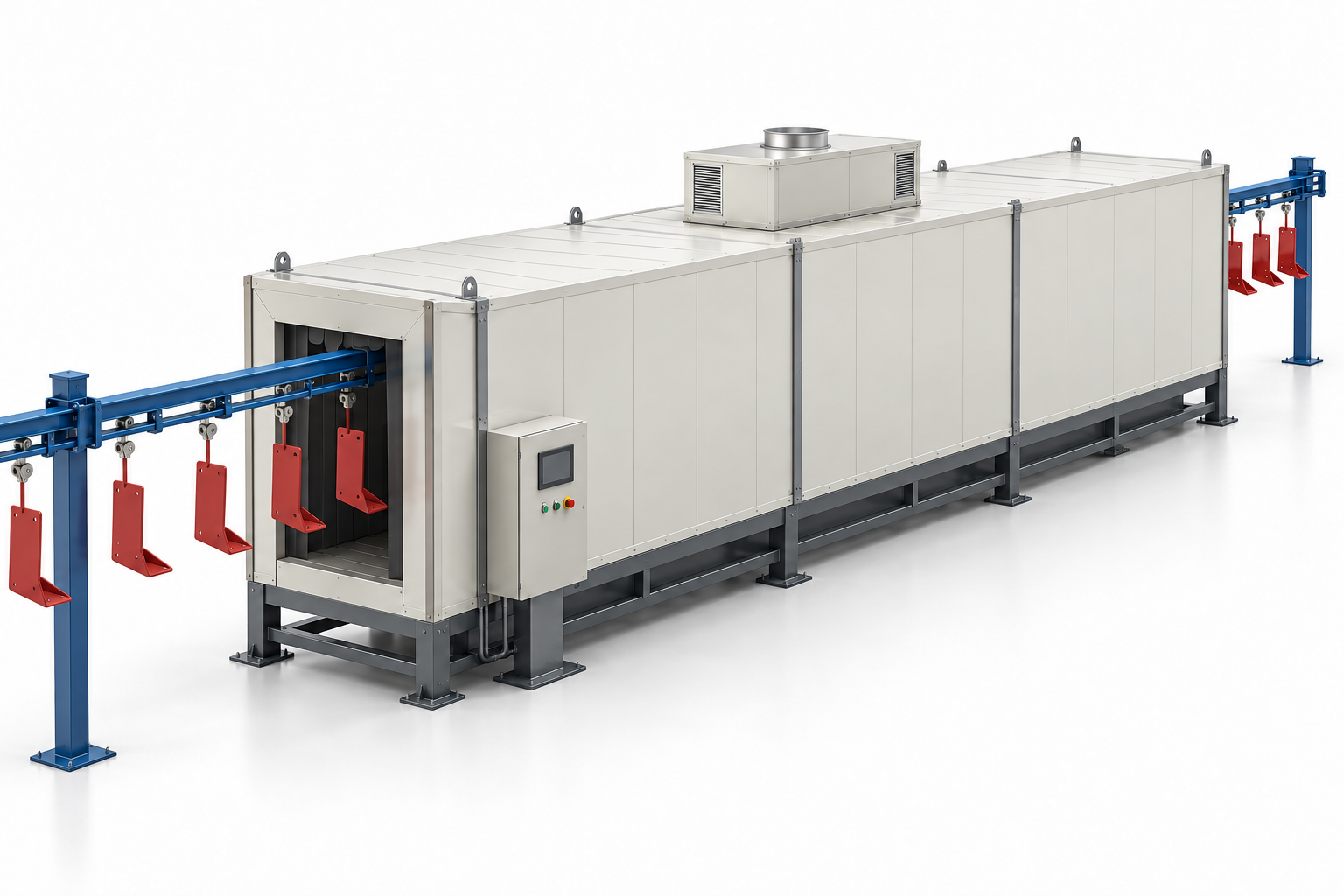
Straight-through curing oven with an aligned overhead conveyor carrying red metal parts through opposite ends

Controlled curing, backed by measurement

  • A straight-through conveyor oven. Parts move through a controlled heating process as part of our connected production line.
  • Advanced Siemens controls. Computer-managed heating supports repeatable conditions for the parts and coating being processed.
  • In-house oven recording. Our testing equipment lets us check performance ourselves, including as conditions change through the year.
  • Care after coating. Once cooled, finished parts are handled and protectively packaged for the next stage of their journey.
The technical detail: temperature, cure and oven recording

What happens inside the oven

Thermosetting powder melts and flows, then chemically cross-links to develop the finished coating’s properties. Thermoplastic powder melts and fuses, then solidifies on cooling. Each product has its own processing requirements.

For a thermoset, the metal itself must reach the powder manufacturer’s specified temperature and remain there for the required time. Heavy or thick parts take longer to heat. The oven-air reading alone does not establish that the part has cured correctly.

Controls manage the oven. Recording checks performance.

Siemens controls manage heating, while conveyor travel determines time through the oven. The settings must work together for the coating and the parts being processed.

In-house oven recorders let us measure temperature over time and assess heating performance against the required conditions. This helps us check the process, investigate variation and respond to changes, including seasonal conditions.

Having the equipment in-house means our team can carry out these checks ourselves.

Let’s find the right approach
for your parts.

Tell us what you’re making, where it will be used and the finish you need. We’ll help you work through the options.

Talk to our team